
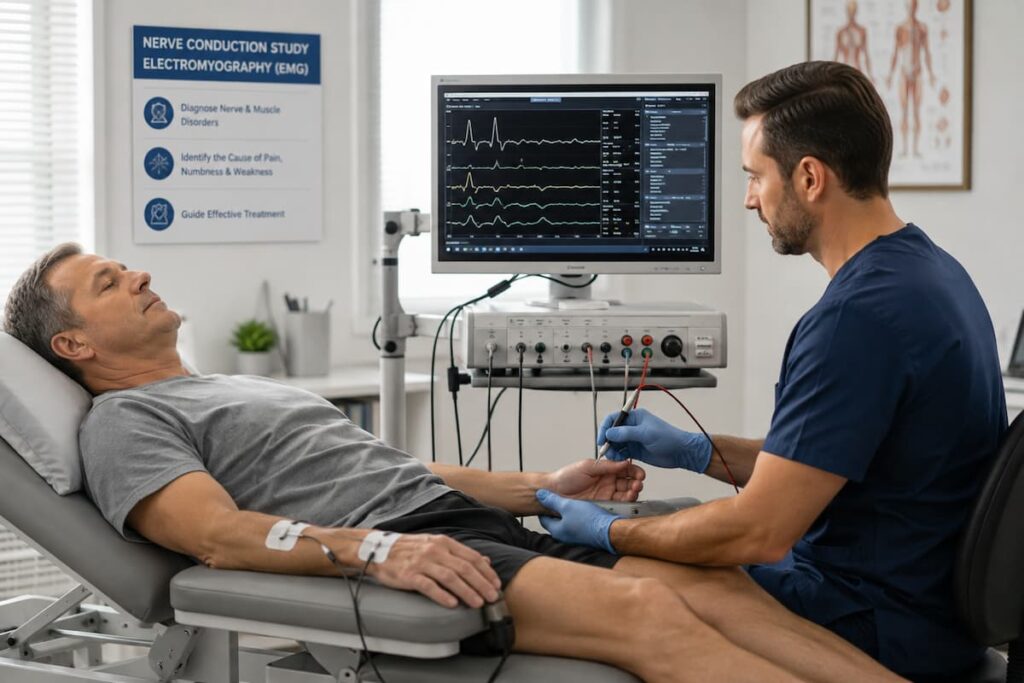
EMG Testing Near Mt. Clemens, MI
Persistent tingling, numbness, weakness, muscle cramping, or radiating pain can make everyday movement feel uncertain. EMG testing helps evaluate how muscles and nerves are functioning, giving a clinician objective information that may help clarify the source of symptoms. For people seeking EMG testing near Mt. Clemens, MI, Wellness Physical Medicine Center in Clinton Township, MI, offers a regional option for taking the next step in a thoughtful diagnostic evaluation.
An electromyography examination is not a treatment by itself. It is a diagnostic tool that can contribute important information when symptoms may involve a nerve, muscle, nerve root, or the connection between nerves and muscles. Results are considered alongside a person’s symptoms, medical history, physical examination, and other appropriate clinical information.
What an EMG Exam Can Help Evaluate
EMG testing records electrical activity in muscles and may be paired with nerve conduction studies, which measure how well and how quickly electrical signals travel through specific nerves. Together, these electrodiagnostic tests can help distinguish between certain types of nerve and muscle concerns. The examination can provide more detail than symptoms alone, especially when discomfort, weakness, or altered sensation has more than one possible cause.
A referral or recommendation for an EMG may arise when a clinician wants to investigate whether symptoms appear more consistent with irritation or dysfunction involving a peripheral nerve, a nerve root, or muscle tissue. An abnormal result does not automatically establish every detail of a diagnosis, and a normal result does not replace a complete clinical assessment. The value of the test is in how its findings fit the larger picture.
Symptoms that may lead to electrodiagnostic testing
People pursue nerve and muscle testing for many reasons. A clinician may consider this type of evaluation when symptoms are ongoing, recurrent, progressive, difficult to localize, or affecting daily tasks such as walking, gripping, typing, lifting, or sleeping.
- Numbness, pins-and-needles sensations, or burning discomfort in an arm, hand, leg, or foot
- Muscle weakness, reduced grip, foot drop, or difficulty with coordinated movement
- Pain that travels from the neck or low back into an extremity
- Muscle twitching, cramping, fatigue, or unexplained loss of muscle bulk
- Symptoms that may be associated with conditions such as carpal tunnel syndrome, radiculopathy, or peripheral neuropathy
These symptoms can have different causes, and no one symptom proves that a person needs an EMG. For example, hand numbness can occur with a localized nerve compression, a neck-related nerve issue, circulation concerns, or other factors. A careful evaluation helps determine whether electrodiagnostic testing is likely to add useful information.
EMG and nerve conduction studies are related, but not identical
Although people often use the term EMG for the full appointment, an EMG and a nerve conduction study assess different parts of the neuromuscular system. A nerve conduction study typically uses small electrical stimuli on the skin to evaluate signal transmission along selected nerves. Needle electromyography uses a very fine electrode in selected muscles to assess electrical activity at rest and with muscle activation.
The two portions can complement each other. Nerve conduction testing may be especially useful when evaluating peripheral nerve signal changes, while the needle portion can help assess patterns within muscles and may offer clues about nerve root or muscle involvement. The exact components of an electrodiagnostic evaluation depend on the symptoms being investigated and the clinical question behind the referral.
What to Expect at an EMG Testing Appointment
Most EMG appointments involve a focused history, testing of selected nerves and muscles, and a discussion of practical preparation. The number of areas examined varies because the test should be tailored to the concern being assessed. Asking about the expected process ahead of time can help you arrive prepared and reduce uncertainty.
Before your appointment
Preparation instructions can vary, so follow the directions provided when your appointment is arranged. In general, it is helpful to arrive with clean, dry skin and avoid lotions, oils, or creams on the areas likely to be tested because they can affect electrode contact. Wear clothing that allows practical access to the arms, legs, neck, or back if those areas are relevant.
Be ready to discuss when symptoms started, where they occur, what makes them better or worse, and whether they are changing. Bring a current medication list and share relevant health details with the clinician coordinating the examination. In particular, people who use blood-thinning medication, have a bleeding disorder, have a pacemaker or other implanted electrical device, or have concerns about skin infection should ask for individualized guidance before testing.
During the nerve and muscle evaluation
The examination begins with questions that focus the test on the most relevant areas. During nerve conduction testing, electrodes are placed on the skin and brief electrical pulses are delivered. The sensation can be surprising or uncomfortable for some people, but each stimulus is brief.
If needle EMG is part of the evaluation, a fine electrode is placed into selected muscles. You may be asked to relax and then gently contract a muscle in specific ways. Some temporary soreness, small bruising, or minor tenderness afterward can occur, but many people return to usual activities the same day unless they receive different medical instructions.
- Review symptoms, affected body areas, and relevant health history.
- Perform nerve conduction measurements when indicated.
- Evaluate selected muscles with needle electromyography when appropriate.
- Interpret findings in context and coordinate next steps with the referring or treating clinician.
How Results May Support a More Focused Care Plan
Electrodiagnostic testing can narrow a broad symptom picture into more useful clinical questions. It may help identify whether findings suggest a focal nerve issue, a more widespread neuropathic pattern, possible radiculopathy, or muscle-related changes. That information can help guide discussions about conservative care, additional imaging, specialist consultation, activity modification, or other next steps that fit the individual situation.
It is equally important to understand what an EMG does not do. It does not directly show bones, discs, joints, or every soft-tissue structure, so imaging may be useful in some circumstances. It also does not replace a physical examination or explain every source of pain. A strong diagnostic plan uses the right tool for the right question rather than relying on a single test in isolation.
For a closer overview of the examination’s role in evaluating nerve and muscle concerns, review EMG testing and electrodiagnostic evaluation options in the context of your symptoms. If an EMG is being considered, the most useful question is often not simply whether the test is uncomfortable, but what clinical question the result is intended to answer.
Choosing a Nearby Option for EMG Testing
When comparing options for EMG testing near Mt. Clemens, consider whether the appointment process clearly addresses your symptoms, referral information, medication considerations, and expected follow-up. Clear communication matters because electrodiagnostic findings are most useful when the test is directed toward a specific concern and understood within a complete clinical context.
Wellness Physical Medicine Center is located in Clinton Township, Michigan, not in Mt. Clemens. For individuals in Mt. Clemens and surrounding Michigan communities, the Clinton Township location may be a relevant place to contact when seeking information about electrodiagnostic testing and the next steps for an evaluation. Contacting the practice directly allows you to ask practical questions that are specific to your needs.
Questions worth asking before you schedule
A brief conversation before an appointment can help you determine whether the service aligns with your situation. It can also help you prepare for the examination and understand how results will fit into your broader care plan.
- Do I need a referral or records from another clinician before scheduling?
- Which body area and symptoms will the examination address?
- Should I change anything about medications, skin products, or clothing before the visit?
- Will nerve conduction studies, needle EMG, or both be considered?
- How will the findings be communicated and used in planning next steps?
Seeking timely professional guidance is particularly important for sudden or worsening weakness, new loss of coordination, rapidly changing numbness, or symptoms that interfere substantially with safe movement or daily function. An EMG can be a valuable part of evaluation, but urgent symptoms may require more immediate medical assessment.
Frequently Asked Questions
What is EMG testing used for?
EMG testing evaluates electrical activity in muscles and is often combined with nerve conduction studies. It may help assess symptoms such as numbness, weakness, tingling, radiating pain, cramps, or suspected nerve compression. Results help a clinician understand whether nerves, muscles, or nerve roots may be involved.
Is an EMG the same as a nerve conduction study?
No. A nerve conduction study measures how electrical signals move along nerves using skin electrodes and brief stimulation. Needle EMG assesses electrical activity within selected muscles using a fine electrode. The tests are often performed together because they provide different, complementary information.
How should I prepare for an EMG appointment?
Follow the instructions provided for your visit. Common preparation includes avoiding lotions or oils on the skin, wearing accessible clothing, and bringing a medication list. Tell the scheduling team or clinician about blood thinners, bleeding concerns, implanted electrical devices, or skin issues so they can provide appropriate guidance.
Is Wellness Physical Medicine Center located in Mt. Clemens, MI?
No. Wellness Physical Medicine Center is located in Clinton Township, MI, and serves as a nearby option for people seeking information about EMG testing around Mt. Clemens. Contact the practice to discuss scheduling, referral needs, and whether an electrodiagnostic evaluation is appropriate for your symptoms.
Discuss Your Next Step with Wellness Physical Medicine Center
If nerve or muscle symptoms are making it harder to work, rest, move, or manage daily routines, objective testing may help bring greater clarity to the conversation about your care. Wellness Physical Medicine Center in Clinton Township, MI, can help you start with the practical details, including questions about EMG testing, appointment preparation, and how to proceed.
Contact Wellness Physical Medicine Center today to discuss an EMG testing appointment near Mt. Clemens, Michigan, and to learn what information may be helpful before your visit. Contact the Clinton Township office to take the next step.