
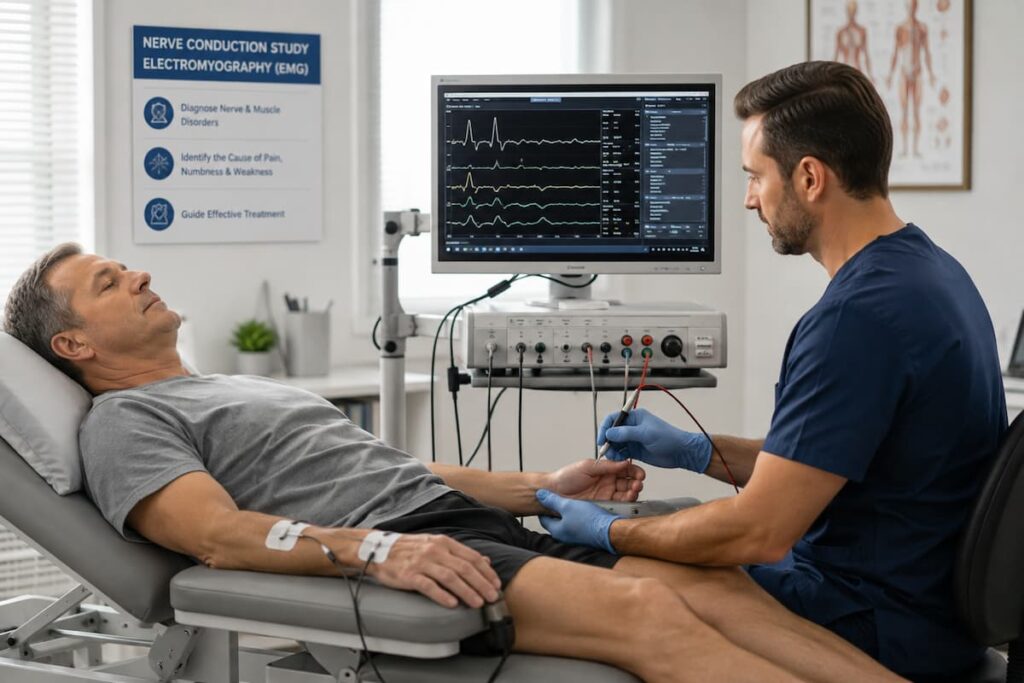
EMG Testing Near Chesterfield, MI
Numbness in the hand, burning pain down a leg, unexplained muscle weakness, or persistent tingling can make everyday activities uncertain. For people seeking EMG testing near Chesterfield, MI, Wellness Physical Medicine Center offers a nearby Clinton Township, MI location where electrodiagnostic evaluation can help clarify whether symptoms may involve nerves, muscles, or the connection between them.
An electromyography evaluation is not simply a test for pain. It is a diagnostic tool that records electrical activity to help distinguish patterns that may be associated with nerve irritation, nerve compression, nerve injury, or muscle-related concerns. That added information can be useful when symptoms are difficult to explain through a physical examination alone.
Wellness Physical Medicine Center serves people from the surrounding Michigan region at its Clinton Township location. If symptoms are affecting sleep, work, grip, walking, balance, or confidence in movement, contacting the practice is a practical way to discuss whether this type of diagnostic testing may fit the next step in your care.
When an EMG study may help explain your symptoms
EMG testing may be considered when a person has symptoms that suggest a possible nerve or muscle problem but needs more diagnostic detail. The study can contribute objective information about how selected nerves and muscles are functioning. It is often used alongside a health history, physical examination, and other clinical information, rather than replacing them.
Symptoms can overlap. For example, hand tingling may stem from a compressed nerve at the wrist, irritation closer to the neck, or another condition entirely. Likewise, pain that travels from the low back into the leg can have several possible sources. An electrodiagnostic study can help organize those possibilities by looking at electrical signals in the body.
Common reasons people are referred for evaluation
A provider may recommend a nerve and muscle evaluation for new, ongoing, or worsening symptoms. The purpose is not to assume a diagnosis in advance. The purpose is to gather evidence that may help guide the next conversation about treatment, referral, monitoring, or additional testing.
- Tingling, numbness, burning, or pins-and-needles sensations
- Muscle weakness, cramping, twitching, or loss of muscle bulk
- Hand or wrist symptoms that raise concern for carpal tunnel syndrome
- Neck pain with symptoms extending into a shoulder, arm, or hand
- Low-back symptoms that extend into the buttock, leg, foot, or toes
- Questions about peripheral neuropathy, radiculopathy, or another nerve-related pattern
Symptoms do not need to fit a perfect pattern before someone asks about testing. What matters is whether a clinician believes the findings could answer a specific question. A useful referral question might be whether a nerve is being compressed, whether symptoms appear to originate near the spine, or whether a broader peripheral nerve process should be considered.
EMG and nerve conduction studies are related, but not identical
People often use “EMG” to describe the whole appointment, although electrodiagnostic testing may include more than one component. A nerve conduction study measures how electrical signals travel along selected nerves using surface electrodes and brief stimulation. Needle electromyography evaluates electrical activity within selected muscles using a fine electrode.
These components provide different kinds of information. Nerve conduction testing may help assess the speed and strength of signals traveling through a nerve. The needle portion can provide information about muscle electrical activity at rest and with gentle activation. Depending on the reason for the referral, one or both portions may be appropriate.
Understanding the distinction can help set expectations. A request for EMG testing and electrodiagnostic evaluation may refer to a planned assessment that combines nerve conduction measurements with a muscle examination when clinically indicated. The exact approach depends on symptoms and the clinical question, not on a one-size-fits-all test panel.
What the EMG testing visit typically involves
An EMG appointment is generally a focused diagnostic visit that involves discussion, preparation, testing of selected areas, and review of next steps. The study is tailored to the body region and symptoms being evaluated. Testing a hand problem, for example, is different from evaluating leg symptoms that may be related to the lower back.
Before testing begins, the clinician may ask when symptoms started, where they occur, what makes them better or worse, and whether weakness or sensory changes have developed. Be ready to share relevant medical history, prior injuries or surgeries, medications, and results from other evaluations if available. Clear details help connect test findings with the symptoms that brought you in.
A practical step-by-step picture of the appointment
- Initial discussion: The visit begins with the reason for testing and the areas of concern. This helps determine which nerves and muscles may need to be assessed.
- Skin preparation and positioning: The area is positioned for access, and the skin may be cleaned before surface electrodes are placed for nerve conduction measurements.
- Nerve testing: Small electrical impulses are used to stimulate specific nerves while responses are recorded. The sensations are brief and can feel unusual or startling, but the testing is designed to collect measurable information.
- Muscle testing when indicated: A fine electrode may be used to record activity in selected muscles. The clinician may ask for a small movement or for the muscle to relax at different points.
- Completion and follow-up: After the examination, ask how findings will be communicated and what the appropriate next step is for your situation.
Comfort concerns are understandable. Nerve stimulation and the needle portion can cause temporary discomfort, and some areas may feel more sensitive than others. Let the clinician know if you are anxious, have difficulty with positioning, or need a brief pause. Open communication can make the experience more manageable without compromising the purpose of the study.
How to prepare and what to discuss before scheduling
Simple preparation can support accurate testing and a smoother visit. Clean, dry skin is often helpful because lotions, oils, and creams can interfere with electrode contact. Wear clothing that allows reasonable access to the area being evaluated, or ask the office what clothing is most practical for your appointment.
It is also important to disclose medical considerations in advance. Ask the practice or the clinician directing your care about medications, bleeding concerns, implanted electrical devices, pregnancy, recent procedures, skin conditions, or any other factor you believe could affect testing. Do not stop medication on your own unless the appropriate prescribing clinician instructs you to do so.
- Write down the main symptoms, affected areas, and when they occur.
- Bring identification, referral information if applicable, and relevant prior records.
- Avoid applying heavy lotions or oils to the area on the day of testing unless instructed otherwise.
- Ask whether any special preparations apply to your personal health history.
- Plan questions about how results fit with current symptoms and care recommendations.
People sometimes worry that normal or abnormal results alone will provide every answer. Electrodiagnostic findings are valuable, but they are interpreted in context. A result may support a suspected nerve issue, help rule out certain patterns, identify a need for more evaluation, or show that symptoms require consideration beyond the nerves and muscles tested.
Choosing a nearby option for Chesterfield residents
Choosing where to seek diagnostic testing involves more than selecting the closest listing. The most useful choice is one that can address the reason for the study, explain the process clearly, and help you understand how the information fits into your broader care plan. Wellness Physical Medicine Center is located in Clinton Township, MI, not Chesterfield, so prospective patients should consider the location and scheduling details that work best for them.
Before booking, it can be helpful to ask what information the office needs, whether a referral or prior documentation is relevant, and how results are handled after the test. You may also want to confirm what body region or symptoms the referring clinician wants evaluated. These questions can reduce confusion and help the testing visit stay focused.
Questions that support an informed decision
A good diagnostic appointment starts with a clear purpose. If you are comparing options for EMG testing near Chesterfield or elsewhere in Michigan, focus on practical communication and clinical fit rather than assuming every test is the same. The following points can help you have a more productive scheduling conversation:
- What clinical question is the study intended to address?
- Will the evaluation potentially include nerve conduction testing, needle EMG, or both?
- What should I bring, wear, or avoid before the appointment?
- How will findings be shared with me and with the clinician coordinating my care?
- Are there health conditions or medications I should mention before testing?
EMG testing does not treat the underlying problem by itself. Its benefit is diagnostic clarity. When a study helps identify a pattern consistent with nerve compression, nerve-root irritation, peripheral nerve involvement, or muscle dysfunction, that information can make the next care decision more targeted. When findings do not show the suspected pattern, that information can be meaningful as well because it may redirect the evaluation.
Take a clear next step with Wellness Physical Medicine Center
Persistent numbness, weakness, radiating discomfort, or unexplained changes in sensation deserve thoughtful attention. Wellness Physical Medicine Center offers a Clinton Township, Michigan location for people from Chesterfield, MI and nearby communities who need to explore whether electrodiagnostic testing is appropriate for their symptoms.
Contact Wellness Physical Medicine Center to discuss scheduling, preparation, and the information needed for your visit. A conversation with the office can help you decide whether an EMG study is the right diagnostic step and how to arrive prepared for a focused evaluation.
Contact Wellness Physical Medicine Center to ask about EMG testing at the Clinton Township, MI location and take the next step toward understanding your symptoms.
Frequently asked questions about EMG testing
What is EMG testing used for?
EMG testing evaluates electrical activity in selected muscles and, often with nerve conduction studies, how signals travel through selected nerves. It may help investigate numbness, tingling, weakness, muscle symptoms, suspected carpal tunnel syndrome, peripheral neuropathy, or symptoms that may relate to nerve-root irritation near the spine.
Does an EMG test hurt?
EMG testing can be uncomfortable, but sensations are usually temporary. Nerve conduction testing uses brief electrical stimulation, while needle electromyography may cause a short pinch and muscle soreness afterward. Tell the clinician about anxiety, sensitivity, or positioning concerns so the process can be explained and paced appropriately.
Do I need to prepare for an EMG appointment?
Preparation may include arriving with clean skin and avoiding lotions or oils on the area being tested. Bring relevant medical information and discuss medications, bleeding concerns, implanted devices, pregnancy, or skin issues with the office beforehand. Do not change medications unless your prescribing clinician tells you to do so.
Is Wellness Physical Medicine Center in Chesterfield, Michigan?
No. Wellness Physical Medicine Center is located in Clinton Township, MI and serves people seeking EMG testing near Chesterfield, Michigan. Contact the practice to discuss location details, scheduling, and whether electrodiagnostic evaluation may be appropriate for your symptoms.