
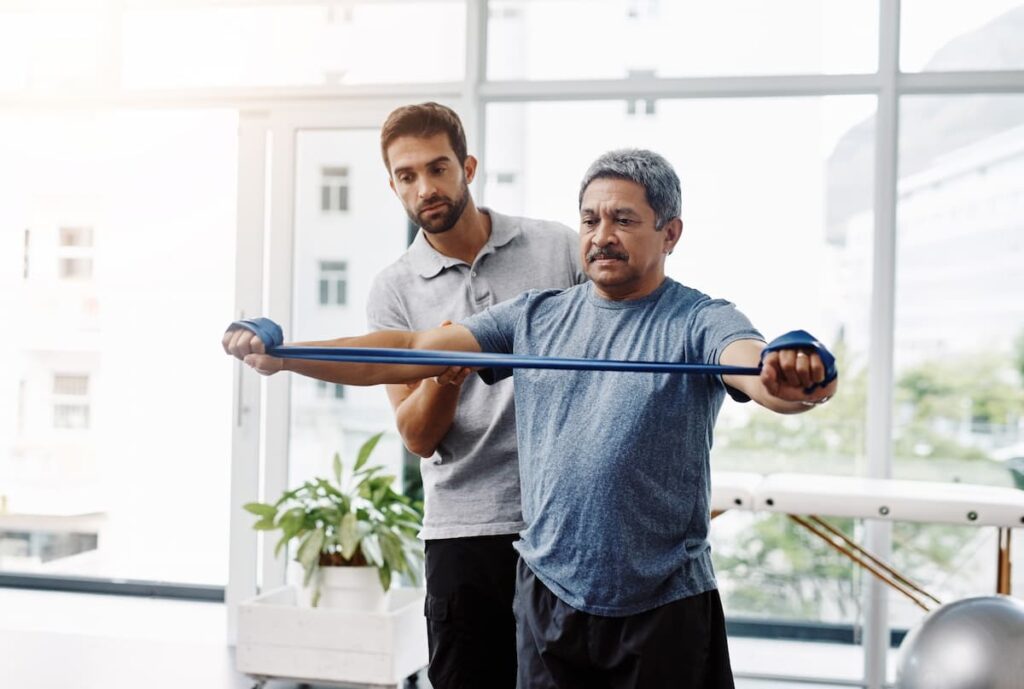
Physical Rehabilitation Near Clinton Township, MI
When pain, stiffness, weakness, or reduced mobility starts limiting ordinary movement, a structured rehabilitation plan can help you work toward safer, more confident function. Wellness Physical Medicine Center provides care for people seeking physical rehabilitation near Clinton Township, MI, with an emphasis on understanding how symptoms affect real activities such as walking, working, lifting, sleeping, and returning to preferred routines.
Physical rehabilitation is not simply a set of exercises to complete. It is a process of assessing movement, identifying practical limitations, setting appropriate goals, and adjusting a plan as your body responds. For residents of Clinton Township and surrounding Michigan communities, the right next step begins with a conversation about your concerns and whether an evaluation is appropriate.
What physical rehabilitation is designed to address
Physical rehabilitation helps people improve movement, function, and confidence after pain, injury, illness, surgery, or a period of reduced activity. A rehabilitation plan commonly combines education, guided movement, progressive activity, and symptom-aware strategies intended to support day-to-day function.
Symptoms can affect more than one body part or one moment in the day. Back discomfort may make it harder to get out of a chair. Knee pain may change how a person uses stairs. Shoulder limitations can interfere with reaching, dressing, or job tasks. A useful rehabilitation approach considers those real-world demands instead of treating movement as an isolated task.
Common reasons people consider rehabilitation care
People seek rehabilitative care for many different reasons. Some have a clear event, such as an injury or surgery. Others notice a gradual decline in mobility, balance, strength, or tolerance for daily activity. Persistent symptoms deserve thoughtful attention when they continue to disrupt normal routines.
- Muscle, joint, neck, back, hip, knee, or shoulder discomfort that affects movement
- Stiffness or weakness after inactivity, injury, illness, or a medical procedure
- Difficulty with walking, stairs, standing, reaching, bending, lifting, or transfers
- Reduced balance, coordination, endurance, or confidence during everyday activity
- A desire for a more organized return to work, exercise, household tasks, or recreation
Not every concern has the same cause or needs the same pace of care. Pain intensity alone does not always show how much a condition is affecting function, and a symptom-free day does not necessarily mean a person is ready to resume every demanding activity. A plan should account for both symptoms and the movements that matter most to the individual.
What to expect from a thoughtful rehabilitation process
A productive rehabilitation experience begins with a clear picture of what is happening now and what you need to be able to do. Wellness Physical Medicine Center can be a relevant contact point for individuals near Clinton Township, MI who want to discuss their limitations and explore an appropriate path forward.
The evaluation connects symptoms to functional goals
Early discussions and assessment typically focus on the history of the problem, aggravating and easing factors, current activity tolerance, and meaningful goals. Functional goals are specific and practical. They may include getting through a work shift with less difficulty, walking more comfortably, carrying groceries, improving a range of motion, or resuming a fitness routine with better control.
Movement observation can help identify patterns that may be contributing to difficulty. Depending on the situation, this may include looking at posture, joint motion, strength, balance, gait, coordination, or how a person performs a particular activity. The purpose is not to force movement through pain. It is to gather useful information for a plan that fits the person’s starting point.
Care plans usually progress in manageable stages
Rehabilitation rarely follows a perfectly straight line. Symptoms and activity tolerance can change based on sleep, workload, stress, previous activity, healing, and other health factors. A sensible plan uses gradual progression so the challenge matches current ability rather than asking the body to do too much too soon.
- Clarify the problem: Discuss symptoms, health history, daily demands, and the activities currently affected.
- Establish priorities: Identify realistic short-term and longer-term functional goals.
- Build movement capacity: Use guided exercises, mobility work, strengthening, balance practice, or activity modification as appropriate.
- Monitor response: Notice changes in symptoms, movement quality, and tolerance between visits or activities.
- Prepare for independence: Apply strategies to work, home, exercise, and other meaningful routines.
The pace and components of care depend on the individual. Some people need help restoring comfortable motion before progressing activity. Others may primarily need improved strength, endurance, balance, or confidence. Clear communication about symptom changes and daily challenges helps keep a rehabilitation program relevant.
How rehabilitation supports everyday movement
The practical value of rehabilitation is its connection to function. Rather than focusing only on a diagnosis name, a functional restoration plan considers what you need your body to do in ordinary life. That may mean moving with more control, tolerating activity for longer, or learning how to modify tasks while you build capacity.
Benefits that can matter beyond the appointment
Progress is personal, and no provider can promise a particular result. Still, a well-organized physical recovery program can give people a clearer framework for responding to movement limitations. Education and consistency often matter as much as any individual exercise because they help people understand how to participate in their own care.
- Better awareness of movement patterns that aggravate symptoms
- More structured progression from limited activity toward meaningful tasks
- Guidance on pacing, body mechanics, and appropriate activity modification
- Opportunities to build strength, mobility, stability, balance, or endurance
- A practical plan for carrying helpful habits into daily life
Home recommendations are often most useful when they are simple enough to repeat consistently and specific enough to serve a purpose. More exercises are not automatically better. A manageable plan that fits your routine may be easier to follow than an overly complicated program that is difficult to sustain.
Choosing a provider for rehabilitation needs
Choosing rehabilitation care involves more than finding a nearby listing. Patients should look for communication, a clear explanation of the proposed approach, and attention to goals that matter outside the appointment. It is also reasonable to ask how progress will be tracked and when the plan may need to change.
Important considerations before you begin
A rehabilitation program should be compatible with your health history and current limitations. Be prepared to share prior injuries, surgeries, diagnoses, medications, recent changes in symptoms, and any directions you have received from another healthcare professional. This information helps support safer decision-making.
It is also important to recognize when symptoms may need prompt medical attention rather than routine rehabilitation planning. Sudden severe symptoms, chest pain, difficulty breathing, new loss of bowel or bladder control, fainting, significant unexplained weakness, or symptoms after a serious accident should be addressed urgently. When in doubt, contact an appropriate medical professional or emergency service.
For non-emergency concerns, asking direct questions can make the decision more comfortable. Wellness Physical Medicine Center offers a way for people in the Clinton Township, Michigan area to start that conversation without assuming that every concern will require the same service or timeline. The goal is to make an informed decision based on your needs.
A practical path forward near Clinton Township
Living with movement-related limitations can lead people to avoid activities they value, often because they are unsure what will make symptoms worse. Avoidance can be appropriate in the short term for some situations, but prolonged inactivity may also contribute to stiffness, deconditioning, and reduced confidence. Individualized guidance can help separate reasonable caution from unnecessary restriction.
For a closer look at how Physical Rehabilitation can fit into a plan for improved movement and daily function, consider the questions you want answered before reaching out. Think about when the problem began, which tasks are difficult, what makes symptoms change, and what successful progress would look like for you. Those details can make the first conversation more productive.
Wellness Physical Medicine Center is positioned to serve people seeking care near Clinton Township, MI, rather than claiming an office in Clinton Township itself. Contact the center to discuss your concerns, ask about next steps, and determine whether rehabilitation-focused care may be appropriate for your situation in Michigan.
Frequently asked questions about rehabilitation care
What is physical rehabilitation?
Physical rehabilitation is a structured process that supports improved movement and daily function after pain, injury, surgery, illness, or inactivity. It may include assessment, guided exercise, mobility work, education, pacing, and progressive activity based on a person’s symptoms, abilities, and practical goals.
Do I need to wait until pain is severe before seeking rehabilitation?
No. It can be reasonable to seek professional guidance when pain, stiffness, weakness, balance concerns, or reduced mobility begins interfering with normal activities or continues despite basic self-care. Earlier discussion may help clarify safe options, although urgent or severe symptoms require appropriate medical attention.
How long does a rehabilitation plan take?
The length of a rehabilitation plan varies with the condition, starting function, health history, goals, symptom response, and ability to follow recommendations. Some people need short-term guidance, while others benefit from a longer progression. A responsible provider should explain how progress will be monitored and adjusted.
Is Wellness Physical Medicine Center located in Clinton Township, MI?
Wellness Physical Medicine Center is presented as a care option near Clinton Township, MI, not as an office located within Clinton Township. Contact the center directly to discuss its location, current services, and whether its rehabilitation approach is a suitable option for your needs.
Ready to discuss movement, pain, or functional limitations?
Take the next step with Wellness Physical Medicine Center. Use the information you have gathered about your symptoms and goals to begin a focused conversation about rehabilitation options near Clinton Township, Michigan. Contact Wellness Physical Medicine Center to request more information.