
EMG Testing Near Clinton Township, MI
Numbness in the hand, tingling in the feet, unexplained weakness, or pain that seems to travel from the neck or back into an arm or leg can be difficult to sort out. For people seeking EMG Testing near Clinton Township, MI, Wellness Physical Medicine Center provides a place to begin clarifying whether a nerve, muscle, or nerve root may be contributing to symptoms. The practice serves people from the Clinton Township area from its Michigan location, without representing that an office is located in Clinton Township itself.
An electrodiagnostic evaluation does more than attach a name to a symptom. It can supply objective information that helps distinguish patterns such as peripheral nerve irritation, nerve compression, muscle involvement, or possible radiculopathy. That information can support a more focused conversation about the next appropriate step in care.
What an EMG evaluation can help clarify
EMG, short for electromyography, evaluates the electrical activity associated with muscles and the nerves that control them. It is often paired with nerve conduction studies, which measure how efficiently and how quickly an electrical signal travels along a nerve. Together, these electrodiagnostic tests can help assess the part of the neuromuscular system most relevant to a person’s symptoms.
Symptoms can overlap. For example, arm tingling may be associated with a compressed nerve at the wrist, irritation closer to the neck, or another cause altogether. A physical examination, health history, and diagnostic testing each contribute different information. An EMG study is not a replacement for the full clinical picture, but it can add meaningful evidence when the source of symptoms is uncertain.
Concerns that may lead to nerve and muscle testing
People are commonly referred for a diagnostic EMG when symptoms suggest that a nerve or muscle issue deserves closer evaluation. The test may be considered after symptoms persist, recur, interfere with function, or do not clearly match one suspected source. A referral or clinical recommendation should guide whether this type of testing fits an individual situation.
- Tingling, burning, pins-and-needles sensations, or reduced sensation
- Weakness, loss of grip, foot drop, cramping, or muscle twitching
- Pain that radiates from the neck into an arm or from the low back into a leg
- Symptoms consistent with possible carpal tunnel syndrome or another entrapment neuropathy
- Questions about peripheral neuropathy, a pinched nerve, or nerve-root involvement
These symptoms do not automatically mean a person needs an electromyography test, and they do not establish a diagnosis on their own. They are practical reasons to ask a clinician whether an electrodiagnostic assessment could help narrow the possibilities. Sudden weakness, loss of bowel or bladder control, facial drooping, speech difficulty, or other urgent neurological symptoms require prompt emergency evaluation rather than waiting for a routine appointment.
What happens during EMG Testing?
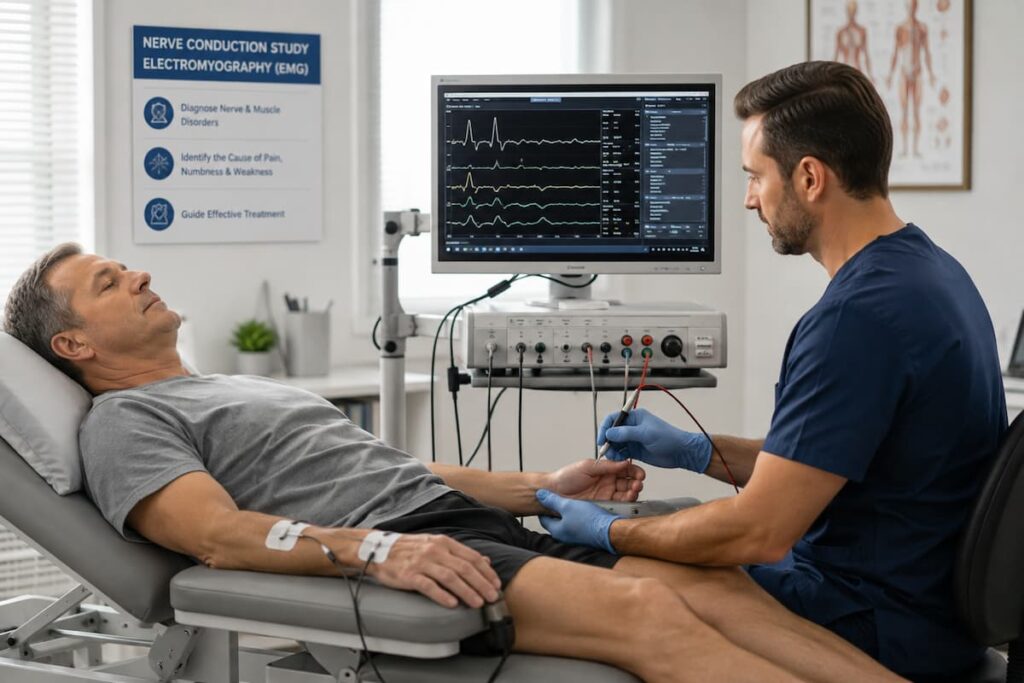
Most EMG Testing appointments involve discussion of symptoms and may include both nerve conduction testing and a needle EMG, depending on the reason for evaluation. Nerve conduction studies use small electrical impulses and recording electrodes placed on the skin. Needle electromyography uses a very fine electrode placed in selected muscles to record activity at rest and with gentle activation.
The exact muscles and nerves checked are individualized to the symptom pattern and the clinical question. Someone with hand numbness may have a different study from someone with radiating leg pain. The test is designed to collect useful information, not to test every nerve and muscle in the body.
A practical look at the appointment
- Review: The visit generally begins with a review of the symptoms, their location, timing, and functional effects, along with relevant medical information.
- Preparation of the area: The skin is accessed for surface electrodes, and the examiner identifies the nerves or muscles most useful to evaluate.
- Nerve conduction portion: Brief electrical stimulation is used while responses are recorded. The sensation can be surprising or uncomfortable for a moment, but each stimulus is brief.
- Needle examination when indicated: A fine electrode is placed into selected muscles. The examiner may ask the patient to relax or move a muscle gently while signals are recorded.
- Interpretation and follow-up: Findings are considered alongside symptoms and other clinical information. Patients should ask how results will be communicated and who will discuss next-step recommendations.
It is reasonable to feel apprehensive about the electrical stimulation or the needle portion. Sensation and tolerance vary by person, and a patient can communicate discomfort during the study. The value of the exam is that it may provide information that symptom descriptions and imaging alone cannot always provide.
How to prepare and what to share before the test
Simple preparation helps keep the study accurate and comfortable. Unless the scheduling team gives different instructions, arrive with clean, dry skin and avoid lotion, oils, or creams on the arms or legs being evaluated. These products can make it harder for surface electrodes to adhere properly.
Before an appointment, share medications, bleeding concerns, implanted devices, allergies, and relevant health conditions with the appropriate clinician or scheduling team. Do not stop prescribed medication unless the prescribing clinician specifically tells you to do so. These conversations allow the testing approach and safety considerations to be addressed appropriately.
Questions worth asking before you schedule
A well-informed choice starts with knowing why the test has been recommended and how the results may affect care. Ask whether both nerve conduction studies and needle EMG are expected, what body area will be examined, and whether there are any preparation instructions specific to your health history. It is also useful to ask how the results will be shared with the referring clinician.
- What clinical question is this study intended to answer?
- Will the evaluation include nerve conduction studies, a needle EMG, or both?
- What information should I bring regarding medications and prior testing?
- Could a result change the plan for therapy, medication, imaging, referral, or another form of care?
- Who should I contact after the test if symptoms change or I have follow-up questions?
Imaging and electrodiagnostic studies are often complementary rather than interchangeable. An MRI can show structures such as discs, joints, and areas where a nerve may have limited space. A nerve conduction study and needle EMG can provide functional information about nerve signaling and muscle electrical activity. The more useful option depends on the question being asked, and some people may need neither, one, or both.
Choosing a nearby option for a diagnostic question
When comparing options near Clinton Township, consider whether the service can address the specific concern behind the referral, not simply whether the word “EMG” appears in a service list. Clear communication about symptoms, a thoughtful review of relevant history, and an explanation of how findings fit the larger care plan all matter. Wellness Physical Medicine Center is a relevant resource for individuals who want to discuss electrodiagnostic testing in the context of ongoing musculoskeletal or nerve-related concerns.
For a fuller overview of the service, EMG Testing at Wellness Physical Medicine Center explains the role of electrodiagnostic evaluation in assessing nerve and muscle function. Bringing prior imaging reports, relevant records, and a concise description of when symptoms occur can make a discussion more productive. Note whether symptoms are constant or intermittent, what triggers them, and whether they affect sleep, walking, work tasks, or hand use.
Useful diagnostic information can reduce guesswork. A normal, abnormal, or inconclusive result each needs interpretation in context. Results may help support a suspected condition, point toward a different area for evaluation, or show that symptoms have not produced measurable changes on the nerves and muscles tested. No single test should be treated as a stand-alone explanation for every symptom.
Take the next step with Wellness Physical Medicine Center
If numbness, weakness, radiating pain, or persistent tingling is disrupting daily activity, contacting Wellness Physical Medicine Center can help you determine whether an EMG evaluation may be appropriate. People traveling from Clinton Township, MI can discuss their symptoms, the reason for referral, and practical questions about the diagnostic process. The goal is a clearer understanding of what testing may contribute to your next care decision.
Wellness Physical Medicine Center is located in Michigan and serves individuals looking for EMG Testing near the Clinton Township area. Contact Wellness Physical Medicine Center to request information or begin a conversation about your diagnostic needs.
Common questions about EMG Testing
What is EMG Testing used for?
EMG Testing evaluates electrical activity in muscles and the nerves that serve them. It may help investigate numbness, tingling, weakness, radiating pain, suspected nerve compression, peripheral neuropathy, or possible nerve-root irritation. Findings are interpreted with a patient’s symptoms, examination, and other medical information.
Is an EMG painful?
Nerve conduction testing creates brief electrical sensations, and needle EMG can cause short-lived discomfort when a fine electrode is placed in selected muscles. Individual tolerance varies. Let the examiner know about discomfort, anxiety, bleeding concerns, or other relevant health issues before and during the appointment.
Do I need both a nerve conduction study and a needle EMG?
Not always. The appropriate parts of an electrodiagnostic evaluation depend on the symptoms, body area involved, and clinical question. Nerve conduction studies focus on signal travel along nerves, while needle EMG evaluates electrical activity within muscles. A clinician can explain which components may be useful for your situation.
Is Wellness Physical Medicine Center located in Clinton Township, MI?
No. Wellness Physical Medicine Center is positioned as a nearby Michigan option for people seeking EMG Testing from the Clinton Township area, rather than as an office in Clinton Township. Contact the practice directly for current location details and to discuss whether the service fits your needs.