
EMG Testing Near New Baltimore, MI
Persistent tingling, numbness, burning pain, weakness, or unexplained muscle symptoms can make everyday tasks feel uncertain. For people seeking EMG Testing near New Baltimore, MI, Wellness Physical Medicine Center provides a Clinton Township, MI option for pursuing clearer information about how nerves and muscles may be functioning.
An electromyography evaluation is not simply a test for pain. It can help distinguish whether certain symptoms may relate to a nerve, a muscle, or communication between the two. That distinction can give a healthcare provider useful information when considering next steps for symptoms affecting the neck, back, arms, hands, legs, or feet.
Wellness Physical Medicine Center serves people from the surrounding Michigan region from its Clinton Township location. If you are comparing options from New Baltimore or elsewhere in MI, contacting the practice is a practical way to discuss whether an electrodiagnostic evaluation may fit your situation and what to expect before scheduling.
What EMG testing can help clarify
EMG Testing evaluates the electrical activity associated with muscles and, when paired with nerve conduction studies, can provide a more complete picture of peripheral nerve and muscle function. The results are generally interpreted alongside your symptoms, physical examination, health history, and any imaging or other diagnostic information already available.
Symptoms can overlap. For example, hand numbness may be associated with a nerve issue near the wrist, a nerve root concern in the neck, or another cause. Similarly, leg weakness or foot tingling can involve areas ranging from the lower back to peripheral nerves in the leg. Electrodiagnostic testing helps organize that clinical picture rather than relying on symptoms alone.
Symptoms that often prompt an evaluation
People are commonly referred for an EMG exam after symptoms continue, interfere with function, or do not have a clear explanation. The test is not appropriate for every ache or sensation, but it can be useful when a clinician needs additional information about possible nerve or muscle involvement.
- Numbness, pins-and-needles sensations, or burning in the hands, feet, arms, or legs
- Muscle weakness, cramping, twitching, or loss of coordination
- Pain that travels from the neck or low back into an arm or leg
- Symptoms that may be consistent with nerve compression, including carpal tunnel syndrome
- Suspected radiculopathy, meaning possible irritation or dysfunction involving a spinal nerve root
- Questions about peripheral neuropathy or a condition affecting muscle function
Testing does not replace a full medical evaluation, and a normal or abnormal study is only one part of the decision-making process. A referral source or evaluating clinician considers the pattern of findings in context. This is important because the location, timing, and severity of symptoms can influence what the study can detect and how results are understood.
EMG and nerve conduction studies are related but different
Many people use “EMG” to describe the full electrodiagnostic appointment, although the appointment may include two distinct types of testing. Nerve conduction studies measure how electrical signals travel along selected nerves. Electromyography, often called needle EMG, assesses electrical activity in selected muscles using a fine recording electrode.
Nerve conduction testing can help evaluate the speed and strength of signals moving through a nerve. Needle electromyography can show patterns that may suggest muscle denervation, reinnervation, or other changes relevant to the clinical question. Depending on the reason for the exam, one or both components may be recommended.
Neither component is the same as an MRI, X-ray, or blood test. Imaging can show anatomy, such as bones, discs, or soft tissues, while a nerve and muscle test assesses function. In some situations, these approaches complement one another. The most useful test is the one that addresses the specific unanswered question in your care.
What your appointment may involve
A typical electrodiagnostic evaluation starts with a review of the concern being investigated. Be prepared to describe when symptoms began, where they occur, whether they come and go, what makes them better or worse, and whether you have noticed weakness or changes in daily function. Sharing relevant records, referrals, imaging reports, or medication information as requested can also help the visit stay focused.
During the nerve and muscle assessment
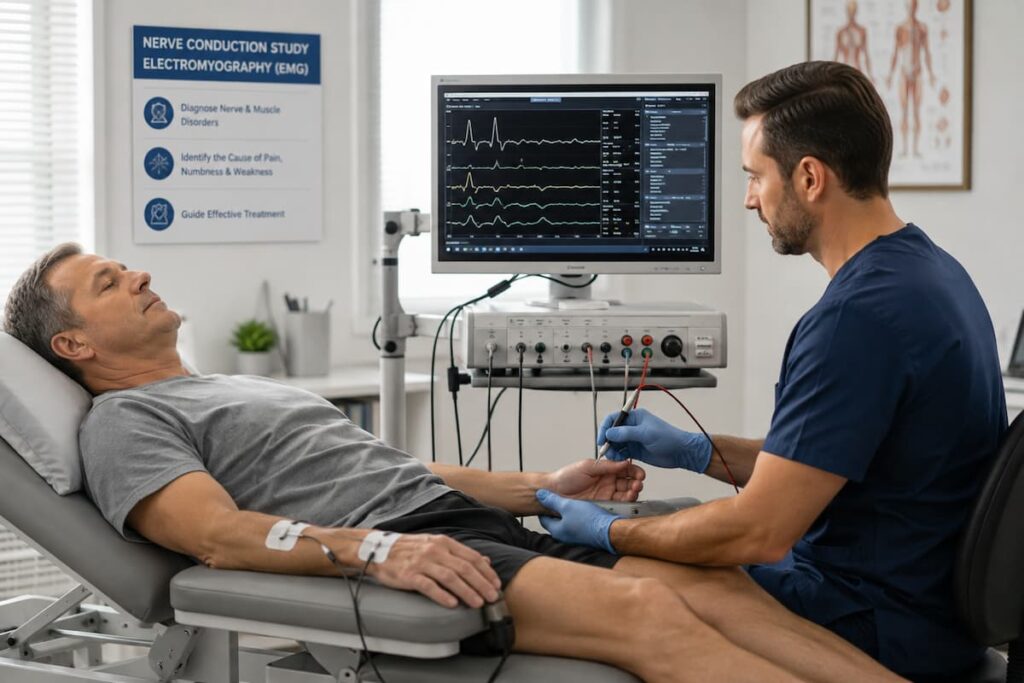
For nerve conduction studies, small electrodes are placed on the skin over selected nerves and muscles. Brief electrical pulses are used to stimulate a nerve, and the equipment records the response. The sensation is temporary and may feel surprising or uncomfortable to some people, but it is generally brief.
If needle EMG is part of the evaluation, a fine electrode is placed into selected muscles to record activity at rest and with gentle movement. You may be asked to relax a muscle and then contract it in a particular way. The areas tested depend on your symptoms and the clinical question, so not every examination involves the same muscles or nerves.
- Arrive ready to discuss symptoms, prior diagnoses, and relevant tests.
- The clinician or team identifies the body area and nerves or muscles relevant to the evaluation.
- Nerve conduction measurements may be performed using surface electrodes and brief stimulation.
- Needle EMG may be added when muscle recording is needed for the diagnostic question.
- The findings are documented for interpretation and communication with the appropriate healthcare professional.
The exact length and components of an appointment vary. A focused assessment for one concern can differ from a more extensive evaluation involving several limbs or symptom areas. Ask Wellness Physical Medicine Center what to bring and whether the referral information identifies a specific body area to be assessed.
Simple preparation can support accurate readings
Follow the instructions you receive from the office and your referring clinician. In general, clean, dry skin helps surface electrodes adhere properly. Lotions, creams, and oils on the areas being tested may interfere with electrode contact, so it is often sensible to avoid applying them before the appointment unless you receive different instructions.
Tell the clinical team about medications, implanted medical devices, bleeding conditions, anticoagulant use, skin infections or open wounds in the test area, and any condition that could affect testing considerations. Do not stop prescribed medication unless the clinician managing that medication tells you to do so. Open communication helps the team consider appropriate precautions and plan the exam responsibly.
After testing, people can generally discuss ordinary activity and any individualized guidance with the clinical team. Minor temporary soreness or small bruising can occur after needle EMG. If you have concerns after an evaluation, contact the office or the healthcare professional who directed your care for guidance tailored to your circumstances.
Choosing an EMG testing option from the New Baltimore area
When symptoms are disruptive, it is understandable to want a fast answer. Still, choosing an EMG testing option involves more than selecting the nearest listing. A useful appointment should be connected to a clear clinical reason for testing, a referral or care plan when applicable, and a process for communicating findings to the professional helping manage your symptoms.
Wellness Physical Medicine Center is located in Clinton Township, not New Baltimore. That clear location distinction matters when you are making plans from New Baltimore, MI. The practice may be relevant for people willing to seek testing in Clinton Township and who want to ask directly about scheduling, referral needs, preparation, and the scope of the evaluation.
Details worth confirming before you schedule
A short conversation before booking can prevent avoidable confusion. Ask about the issue being evaluated, whether both nerve conduction studies and needle EMG are anticipated, and what records should accompany you. If cost, coverage, or referral requirements affect your choice, confirm those details directly with the appropriate office and your health plan rather than making assumptions.
- What symptoms or diagnostic concern is the referral intended to investigate?
- Which body region is expected to be tested?
- Do I need a referral, prior authorization, or records from another provider?
- What preparation instructions apply to my medications, skin products, and clothing?
- How will findings be shared with the clinician coordinating my treatment?
It is also helpful to understand what the test cannot do by itself. An EMG study may provide meaningful evidence about nerve or muscle function, but it does not automatically identify every source of pain, establish every diagnosis, or determine a complete treatment plan. Strong decision-making comes from combining the study with a thoughtful examination and appropriate follow-up.
Take a practical next step with Wellness Physical Medicine Center
Unresolved numbness, weakness, radiating discomfort, or muscle changes deserve careful attention, particularly when they affect work, sleep, balance, hand use, or daily mobility. An electrodiagnostic assessment may help move the conversation from broad possibilities toward more specific information. For urgent or rapidly worsening symptoms, seek prompt medical attention through the appropriate care setting.
For non-emergency questions about EMG Testing near New Baltimore, Wellness Physical Medicine Center in Clinton Township, Michigan can help you start the scheduling conversation. Contact the practice to ask about appointment availability, referral information, preparation, and whether the service is appropriate for the concern you want evaluated.
Ready to discuss an EMG evaluation? Contact Wellness Physical Medicine Center to connect with its Clinton Township, MI location and take the next informed step toward evaluating your nerve or muscle symptoms.
Frequently asked questions about EMG testing
What is EMG testing used for?
EMG testing is used to assess electrical activity in muscles and, often with nerve conduction studies, how signals travel through nerves. It may help evaluate symptoms such as numbness, tingling, weakness, muscle twitching, radiating pain, suspected nerve compression, peripheral neuropathy, or possible radiculopathy.
Is an EMG test painful?
Nerve conduction stimulation may feel like brief electrical pulses. If needle EMG is included, the fine electrode can cause temporary discomfort and mild soreness afterward. The testing team can explain each part of the exam, and the specific sensations vary by person and by the body areas being evaluated.
Do I need to prepare for an EMG appointment?
Preparation instructions can differ, so follow guidance from Wellness Physical Medicine Center and your referring clinician. Clean, dry skin without lotions or oils is commonly helpful. Bring requested records, and disclose medications, anticoagulant use, implanted devices, bleeding concerns, or skin issues affecting the test area.
Is Wellness Physical Medicine Center in New Baltimore, Michigan?
No. Wellness Physical Medicine Center is located in Clinton Township, MI, and serves people seeking EMG Testing near New Baltimore and across the surrounding Michigan region. Contact the Clinton Township office directly to discuss whether scheduling there is suitable for your needs.