
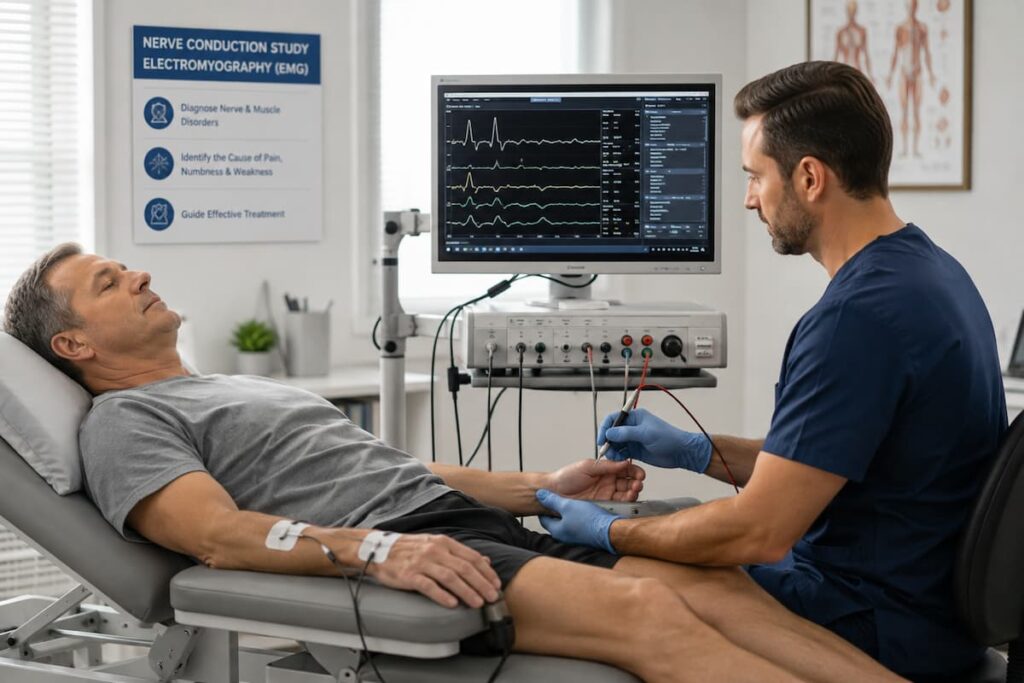
EMG Testing Near Sterling Heights, MI
Persistent numbness, tingling, burning pain, unexplained weakness, or symptoms that travel from the neck or back into an arm or leg can be difficult to sort out. For people seeking EMG Testing near Sterling Heights, MI, Wellness Physical Medicine Center in Clinton Township, MI, offers a local starting point for discussing electrodiagnostic evaluation and what may be contributing to nerve or muscle-related symptoms.
An electromyography evaluation is not simply a test for pain. It can provide functional information about how muscles and nerves are working, helping a clinician investigate symptoms that may not be fully explained by an exam alone. That added information can be useful when deciding whether symptoms may be associated with nerve irritation, nerve injury, a pinched nerve, or a muscle condition.
What an EMG evaluation can help clarify
EMG Testing evaluates the electrical activity associated with muscles and the nerves that control them. It is commonly performed alongside nerve conduction studies, which measure how electrical signals move along specific peripheral nerves. Together, these electrodiagnostic tests can help narrow the source and pattern of certain neuromuscular complaints.
Symptoms can overlap. For example, hand tingling may occur with a nerve problem near the wrist, but it may also relate to a nerve affected farther up the arm or near the neck. An electrodiagnostic study does not replace a medical history, physical examination, or imaging when imaging is appropriate. Instead, it supplies another category of information that may help guide the next conversation about care.
Symptoms that may prompt a referral or discussion
People often explore a nerve and muscle test because a symptom has persisted, become more noticeable, or has not responded as expected to initial care. The right reason to consider testing depends on the individual, symptom pattern, and clinical evaluation. Common concerns that may lead to an EMG discussion include:
- Tingling, numbness, or altered sensation in the hands, feet, arms, or legs
- Weakness, reduced grip, foot drop, or difficulty with a specific movement
- Burning, shooting, or electric-like pain that follows an arm or leg
- Symptoms suspected to involve carpal tunnel syndrome or another peripheral nerve entrapment
- Possible radiculopathy, meaning a nerve root may be irritated or affected near the spine
- Muscle twitching, cramping, or unexplained loss of muscle bulk
These symptoms do not automatically mean a person needs an EMG. They can arise from many causes, including conditions that are not detectable with electrodiagnostic testing. A clinician can help determine whether the test matches the question that needs answering and whether the timing of the study is appropriate.
What the results may and may not show
Electrodiagnostic findings can help identify whether a nerve is conducting signals differently than expected, whether a muscle shows signs of altered nerve input, and which distribution of nerves or muscles is involved. This can support a more focused care plan and may help distinguish between issues that can feel similar from the patient’s perspective.
However, a normal result does not erase every possible cause of pain or sensory change. Some conditions are not well captured by routine EMG and nerve conduction testing, and early or intermittent symptoms may not always produce definitive findings. Results are most meaningful when interpreted in context with the reason for testing, examination findings, and relevant health history.
What to expect from EMG Testing
A typical electrodiagnostic appointment has two possible components: nerve conduction studies and needle electromyography. The exact muscles and nerves evaluated depend on the symptoms being investigated. The process is tailored to the clinical question, rather than using the same set of test sites for every person.
At Wellness Physical Medicine Center, patients from the Sterling Heights area can contact the Clinton Township, Michigan, location to discuss EMG Testing and electrodiagnostic evaluation in relation to their symptoms. Before scheduling, it is reasonable to ask what the appointment involves, what preparation is recommended, and whether a referral or records would be helpful for the evaluation.
Nerve conduction studies use surface electrodes
During nerve conduction testing, small electrodes are placed on the skin over selected nerves and muscles. Brief electrical impulses are used to stimulate a nerve, while the equipment records the response. The sensations are usually short and may feel like a quick tapping or tingling pulse.
The study may assess signal speed, signal size, and other response characteristics. Comparing responses across different parts of the same nerve, or between sides of the body when relevant, can help identify patterns consistent with compression or dysfunction. The number of nerves tested varies according to the symptoms and the area being evaluated.
Needle EMG examines selected muscles
Needle electromyography uses a very fine electrode inserted into selected muscles to record electrical activity at rest and with gentle muscle activation. This portion can feel uncomfortable for some people, but the testing is generally brief at each site. The evaluator may ask for small, specific movements while recording the muscle signals.
Needle EMG can add information that surface testing alone cannot provide. For instance, it may help assess whether a pattern points more toward a nerve root issue, a peripheral nerve issue, or changes affecting the muscle. Not every evaluation requires the same extent of needle examination, and the planned testing should reflect the clinical concern.
Preparing for your appointment and planning afterward
Simple preparation can make the testing process smoother and improve electrode contact with the skin. Follow any instructions provided when scheduling, especially if you use prescription medicines, have a bleeding condition, or have an implanted medical device. Do not stop prescribed medication unless the clinician managing that medication tells you to do so.
- Arrive with clean, dry skin and avoid lotion, oils, or creams on the area being tested when possible.
- Wear comfortable clothing that allows access to the symptomatic arm, leg, neck, or back area, or ask what clothing is most suitable.
- Bring relevant referral information, prior testing, imaging reports, and a current medication list if requested.
- Tell the testing team about blood-thinning medication, bleeding concerns, implanted devices, infections, or skin issues near the planned test area.
- Plan to review how and when results will be communicated, including which clinician will discuss next steps with you.
Many people can return to usual activities after an EMG study. Mild soreness or small bruises can occur at needle examination sites. Contact a medical professional promptly for symptoms that are severe, unexpected, or concerning after any procedure.
How to decide whether an EMG study is the right next step
The most useful EMG is one ordered to answer a specific question. Before choosing a provider or scheduling, consider what symptoms are being evaluated, how long they have been present, and what prior examination or testing has already shown. A clear clinical question helps ensure that the study is focused and that the results can be used meaningfully.
It is also helpful to understand the difference between electrodiagnostic testing and other diagnostic approaches. An MRI or other imaging study shows anatomy, such as discs, joints, and soft tissue structures. EMG and nerve conduction testing evaluate nerve and muscle function. In some situations, the tests complement each other; in others, one may be more relevant than the other.
- Ask what condition or source of symptoms the test is intended to investigate.
- Ask whether both nerve conduction studies and needle EMG may be included.
- Ask what medical information should be sent before the visit.
- Ask how the findings will be shared with the referring or treating clinician.
- Ask what next steps may be considered if the findings are normal, abnormal, or inconclusive.
Choosing an evaluation that fits the clinical question can prevent unnecessary confusion. A test result is most actionable when it is connected to the symptoms, physical findings, and overall treatment decision. Wellness Physical Medicine Center can be a relevant option for people looking beyond Sterling Heights for a Clinton Township location in Michigan where they can begin that conversation.
Take the next step with Wellness Physical Medicine Center
If nerve-related or muscle-related symptoms are affecting work, sleep, walking, hand use, or daily comfort, it may be time to discuss whether an electrodiagnostic evaluation is appropriate. Rather than trying to self-diagnose the source of tingling or weakness, contact Wellness Physical Medicine Center to ask about the evaluation process and how the Clinton Township, MI, location serves patients seeking care near Sterling Heights.
A thoughtful EMG study may help turn a broad symptom description into clearer clinical information. Contact Wellness Physical Medicine Center today to discuss your needs and arrange the appropriate next step at its Clinton Township, Michigan, location.
Frequently asked questions about EMG Testing
What is EMG Testing used for?
EMG Testing is used to evaluate electrical activity in muscles and, when combined with nerve conduction studies, how signals travel through nerves. It may help investigate numbness, tingling, weakness, suspected nerve compression, radiculopathy, or certain muscle-related symptoms. Results are interpreted with a clinical exam and medical history.
Is an EMG painful?
Nerve conduction testing involves brief electrical pulses that can feel startling or uncomfortable. Needle EMG uses a fine electrode in selected muscles and may cause temporary discomfort or soreness. The amount of testing performed depends on the area and clinical question being evaluated.
Should I choose an EMG or an MRI for arm or leg symptoms?
They answer different questions. MRI shows body structures, while EMG and nerve conduction studies assess nerve and muscle function. A clinician may recommend one, both, or neither based on your symptoms, examination, duration of symptoms, and suspected cause.
Is Wellness Physical Medicine Center located in Sterling Heights, MI?
No. Wellness Physical Medicine Center is located in Clinton Township, MI, and serves people seeking EMG Testing near Sterling Heights. Contact the practice to discuss the location, the reason for testing, and practical scheduling details before your visit.