
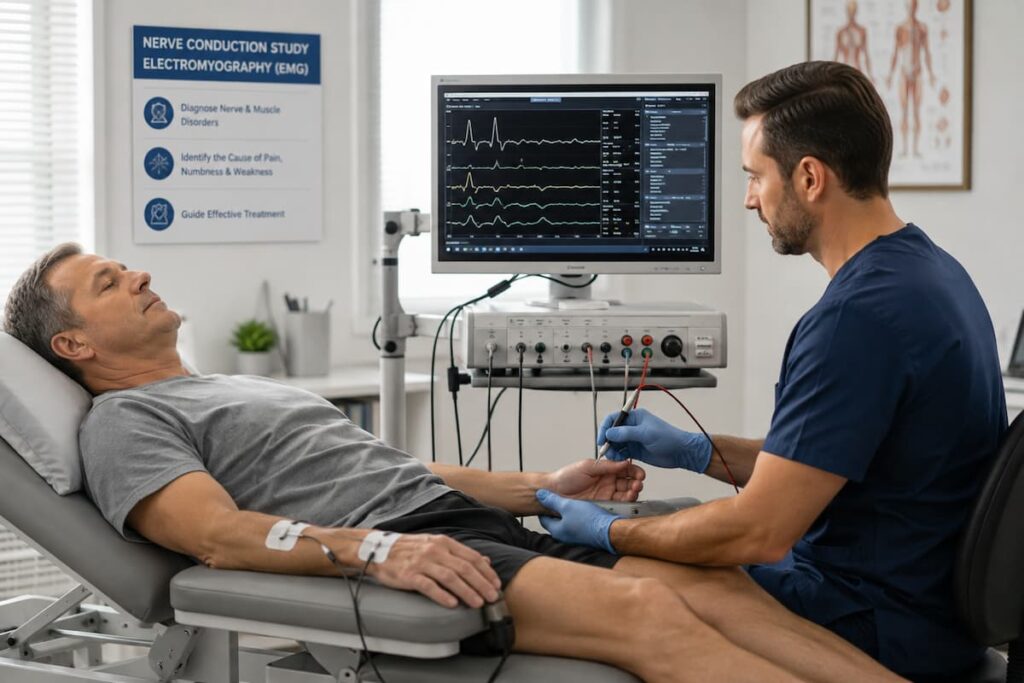
EMG Testing Near Troy, MI
Persistent numbness, tingling, weakness, radiating pain, or unexplained muscle symptoms can make ordinary tasks feel uncertain. For people seeking EMG testing near Troy, MI, Wellness Physical Medicine Center provides a nearby Clinton Township, MI option for discussing electrodiagnostic evaluation and the symptoms that led to the search. An electromyography assessment can supply objective information about how muscles and peripheral nerves are functioning, helping clarify questions that a symptom description alone may not answer.
Symptoms in the neck, back, shoulder, arm, hand, hip, leg, or foot can have overlapping causes. A careful diagnostic process matters because a pinched nerve, a peripheral nerve problem, and a muscle-related condition may feel similar at first. Wellness Physical Medicine Center can be a relevant point of contact for Michigan residents who want to understand whether an EMG study may fit into a broader evaluation plan.
What an EMG study can help clarify
EMG Testing evaluates the electrical activity associated with muscles and nerves. It is commonly considered when a clinician needs more detail about symptoms that may involve the peripheral nervous system, nerve roots, neuromuscular junctions, or muscle tissue. The results are interpreted alongside your history, physical examination, and other appropriate medical information rather than treated as a stand-alone answer.
The term “EMG” is often used broadly. In practice, an electrodiagnostic evaluation may include electromyography, nerve conduction testing, or both. These components gather different kinds of information, so the right study depends on the symptom pattern and the clinical question being investigated.
Muscle testing and nerve conduction testing are related, but different
Needle electromyography records electrical activity from selected muscles using a very fine electrode. It can help identify patterns that may suggest whether a muscle is receiving normal nerve input and whether there are signs of irritation or injury affecting a nerve pathway. The number and location of muscles assessed are selected for the individual clinical question.
Nerve conduction studies use small surface electrodes and controlled electrical stimulation to measure how a signal travels along a nerve. This portion can assess signal speed, timing, and response size. Nerve conduction testing may be particularly useful when symptoms raise questions about focal nerve compression, such as median nerve involvement at the wrist, or other peripheral neuropathy patterns.
People often hear “EMG” when referring to the entire appointment. Asking whether your evaluation may include both nerve conduction studies and needle examination is reasonable, since each test can contribute distinct information. A normal or abnormal result must still be considered in context by the qualified clinician managing the evaluation.
Symptoms that may prompt an electrodiagnostic evaluation
An EMG examination is not appropriate for every ache or episode of tingling, but it may be considered when symptoms persist, recur, affect function, or create diagnostic uncertainty. It can be useful when the source of symptoms is not clear from examination findings alone. The goal is not simply to label a condition, but to obtain information that can guide the next clinical conversation.
- Numbness, pins-and-needles sensations, or burning in the hands, feet, arms, or legs
- Muscle weakness, cramping, twitching, or noticeable loss of muscle bulk
- Radiating pain that may follow a nerve distribution from the spine into an arm or leg
- Hand symptoms that interfere with gripping, typing, sleeping, or fine motor tasks
- Foot drop, balance changes, or leg symptoms that affect walking
- Ongoing symptoms after an injury when nerve involvement is a concern
These symptoms can arise for many reasons, including nerve root irritation, entrapment of a peripheral nerve, generalized neuropathy, muscle disorders, or conditions outside the nervous system. An EMG test does not replace a complete medical evaluation, imaging when indicated, or laboratory testing. Instead, it may narrow the possibilities and help determine which next step is most appropriate.
What to expect at an EMG appointment
Most electrodiagnostic testing appointments involve a focused review of symptoms, nerve conduction measurements when indicated, and possibly a needle EMG examination. The exact sequence and scope vary according to the body area being assessed and the reason for the referral. Knowing the general flow beforehand can make the visit feel more manageable.
- Clinical review: The visit generally begins with discussion of your symptoms, their timing, affected body areas, relevant injuries, medical history, and medications. Share whether weakness is changing, whether symptoms wake you at night, and what activities make them better or worse.
- Preparation of the skin: Surface electrodes may be placed on clean skin over the area being tested. Electrical stimulation during nerve conduction testing is brief and controlled. It can feel like a quick tapping, tingling, or startling sensation.
- Needle muscle assessment, if needed: A thin electrode may be inserted into selected muscles to record activity while the muscle is at rest and while it is gently activated. This can cause short-lived discomfort, but the clinician uses the minimum testing necessary to answer the question.
- Discussion of next steps: Findings are documented for the clinician directing your care. Depending on the situation, next steps may include follow-up, further diagnostic work, conservative care, referral, or a discussion of treatment options.
There is usually no lengthy recovery period from EMG Testing. Some people experience temporary tenderness or small bruises at needle sites, particularly if they are sensitive to needling. Contact the clinician who performed or ordered the examination if you have concerns after testing.
Simple preparation can improve the experience
Follow any instructions you receive from the office or referring clinician. In general, arriving with clean, dry skin can help electrodes adhere and improve signal quality. Avoid applying lotions, oils, or creams to the area being tested on the day of the appointment unless you are told otherwise.
Bring a current medication list and be prepared to discuss prior surgeries, injuries, diabetes, thyroid conditions, neck or back issues, and previous test results if relevant. It is especially important to tell the clinical team about blood-thinning medication, bleeding conditions, implanted electrical devices, or skin infections near a proposed test area. Do not stop prescribed medication unless the prescribing clinician specifically instructs you to do so.
Using results to make a more informed care decision
Electrodiagnostic results can help distinguish between certain types of nerve and muscle involvement, but they do not always provide a single complete explanation for pain. For example, some musculoskeletal conditions can cause pain without creating an abnormal nerve test. Conversely, symptoms may be present before measurable changes appear, depending on timing and the condition being evaluated.
This is why provider selection should focus on clear communication and clinical context, not on a test alone. Before scheduling an EMG test, ask what question the study is meant to answer, whether nerve conduction studies are expected, how results will be shared, and who will explain the implications for your care. Those questions help align expectations and reduce the chance that testing feels disconnected from your treatment plan.
Wellness Physical Medicine Center in Clinton Township, Michigan offers a practical nearby contact option for individuals from the Troy area who want to discuss symptoms and diagnostic needs. In a normal care pathway, an EMG evaluation may help support a diagnosis, rule out certain patterns of nerve dysfunction, or indicate that another form of evaluation deserves attention. It should not be viewed as a screening test to pursue without a symptom-based reason or clinical recommendation.
When prompt medical attention matters
New or rapidly worsening weakness, sudden loss of coordination, loss of bowel or bladder control, facial drooping, trouble speaking, severe headache, chest pain, or trouble breathing requires urgent medical attention. Those symptoms should not wait for a routine electrodiagnostic appointment. For non-emergency but persistent nerve or muscle symptoms, contacting a healthcare professional is an appropriate next step.
Why contact Wellness Physical Medicine Center from the Troy area?
Choosing where to discuss an EMG evaluation is about access, clarity, and a plan that addresses the concern behind the referral. Wellness Physical Medicine Center is located in Clinton Township, MI, not in Troy, and serves as a nearby option for people seeking information about electrodiagnostic testing. The practice can help you start a conversation about whether this type of assessment may be relevant to your symptoms.
For a fuller overview of the test and its role in evaluating nerve and muscle concerns, review EMG Testing and electrodiagnostic evaluation options before reaching out. Having your referral information, symptom history, and questions ready can make the contact process more productive. If another service or level of care is more appropriate, recognizing that early is also valuable.
- Write down when symptoms began and whether they are getting better, worse, or staying the same.
- Note which body areas are affected and whether symptoms occur at rest, during activity, or at night.
- Gather relevant imaging reports, prior test information, and a medication list when available.
- Ask whether there are preparation instructions specific to the area being evaluated.
Do not let uncertainty about the testing process keep you from asking for guidance. A focused conversation can help determine whether a nerve conduction study, needle EMG, another diagnostic approach, or routine follow-up makes sense for your circumstances.
Questions people often ask about EMG testing
What is EMG Testing used for?
EMG Testing measures electrical activity in muscles and, when combined with nerve conduction studies, evaluates how signals travel through peripheral nerves. Clinicians may use it to investigate numbness, tingling, weakness, muscle symptoms, suspected nerve compression, radiculopathy, or neuropathy. Results are interpreted with your symptoms and examination.
Is an EMG test painful?
People may feel brief electrical pulses during nerve conduction testing and temporary discomfort during needle examination if that component is needed. Sensation varies by person and by the muscles tested. The procedure is generally performed in stages, allowing you to communicate if you are uncomfortable or have questions.
Do I need to prepare for an electromyography appointment?
Clean, lotion-free skin is commonly helpful because electrodes need good contact. Bring medication information and tell the clinical team about blood thinners, bleeding concerns, implanted devices, or skin issues. Follow the specific instructions provided for your appointment rather than making medication changes on your own.
Is Wellness Physical Medicine Center located in Troy, MI?
No. Wellness Physical Medicine Center is located in Clinton Township, MI and is presented as a nearby option for people in and around Troy seeking information about EMG evaluation. Contact the practice to discuss your symptoms, referral needs, and whether scheduling is appropriate.
Ready to discuss persistent numbness, weakness, tingling, or radiating pain? Contact Wellness Physical Medicine Center in Clinton Township, Michigan to ask about next steps for an EMG evaluation near Troy, MI.